Client Results

Real changes in posture, gait and movement control.

These examples show clients improving how their body moves through detailed assessment, corrective training and progressive movement work.


Request an Initial Assessment

Client Results

Real changes in posture, gait and movement control.

These examples show clients improving how their body moves through detailed assessment, corrective training and progressive movement work.


Request an Initial Assessment

What These Results Show
Results come from changing how the body moves.
These examples are not about quick fixes or generic exercise. They show changes in posture, gait, movement control and structural organisation after assessing how the body manages pressure, rotation, balance and load.
Assessment
We look at the whole pattern.
Posture, gait, breathing, ribcage position, pelvic control, foot pressure and rotation are assessed together rather than as isolated symptoms.
Correction
We rebuild movement step by step.
The goal is to improve how the body organises movement, not just chase temporary relief or force a position that cannot be maintained.
Progress
Change is measured visually and functionally.
Progress can show up as better posture, smoother gait, improved control, less compensation and a body that moves with more balance.
Featured Results
Visible changes from detailed corrective training.
The examples below show how changes in posture, gait and movement control can happen when the body is assessed and trained as one connected system.
Posture
Better structural organisation.
Clients often come in with visible shifts, rotations, compression patterns or postural habits that have built up over time. The goal is to improve how the body holds itself under gravity, not just force a straighter position.
Gait
Smoother walking mechanics.
Gait changes can show up through better foot pressure, hip control, trunk rotation, arm swing and timing. These changes matter because walking is one of the clearest ways to see how the whole body is coordinating.
Control
More balanced movement patterns.
When the body starts to distribute load more evenly, clients can often move with less compensation, better control and a clearer sense of where their body is in space.
Client Results
Real client changes from detailed corrective training.
These examples show changes in posture, spinal alignment, gait mechanics, movement control and load distribution after working through the deeper compensatory patterns driving each client’s presentation.
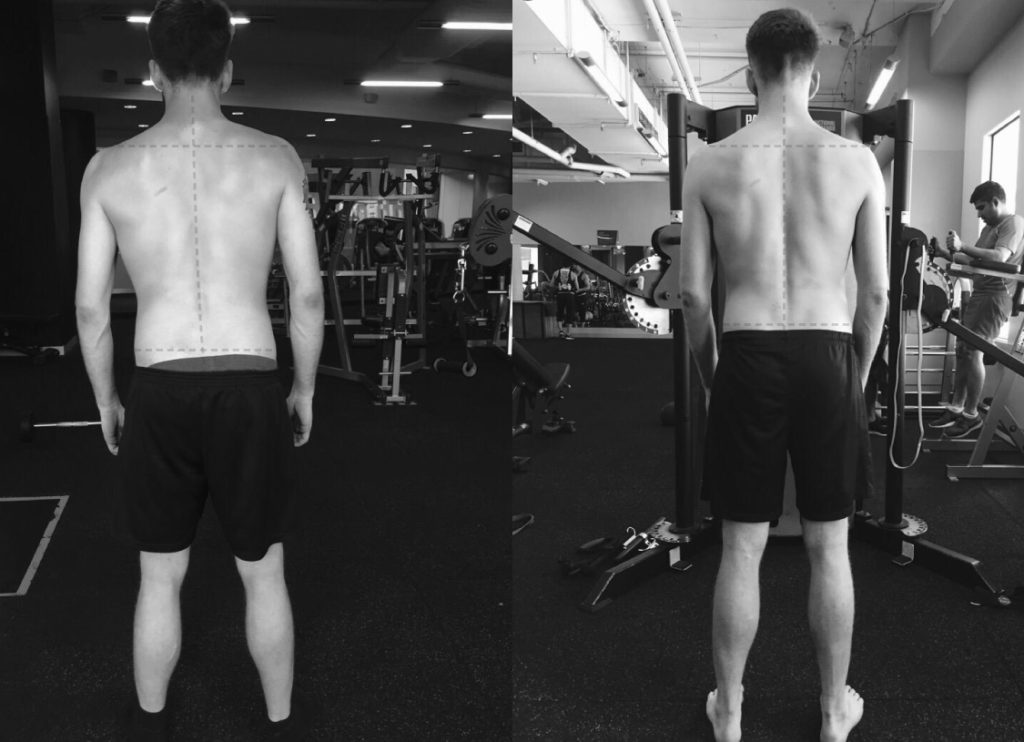
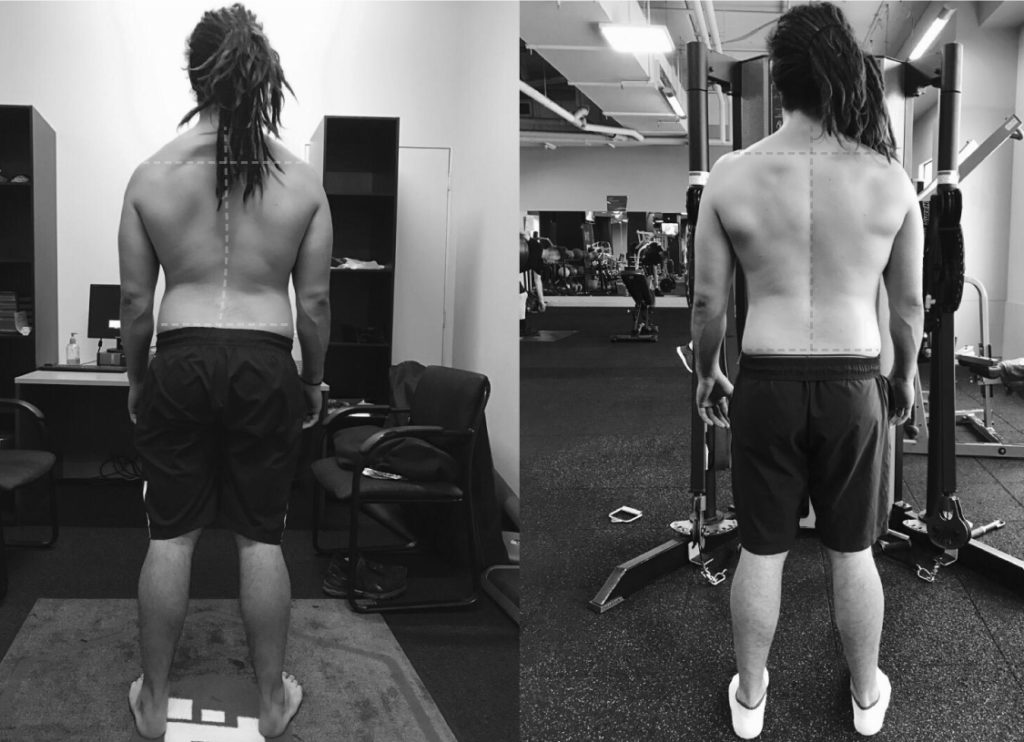
Andrew car accident posterior view client result Functional Training Melbourne
Car Accident Recovery
Lower back and hip pain.
Improved posture, load distribution and movement control after ongoing compensation through the back and hips.
This client came in following a car accident, dealing with ongoing lower back and hip pain that was affecting both work and daily life. As a steel fabricator, rugby player and father of three, his body was under constant demand. The focus was on improving alignment, rebuilding stability through the hips and trunk, and retraining movement patterns that could better support both work and sport.
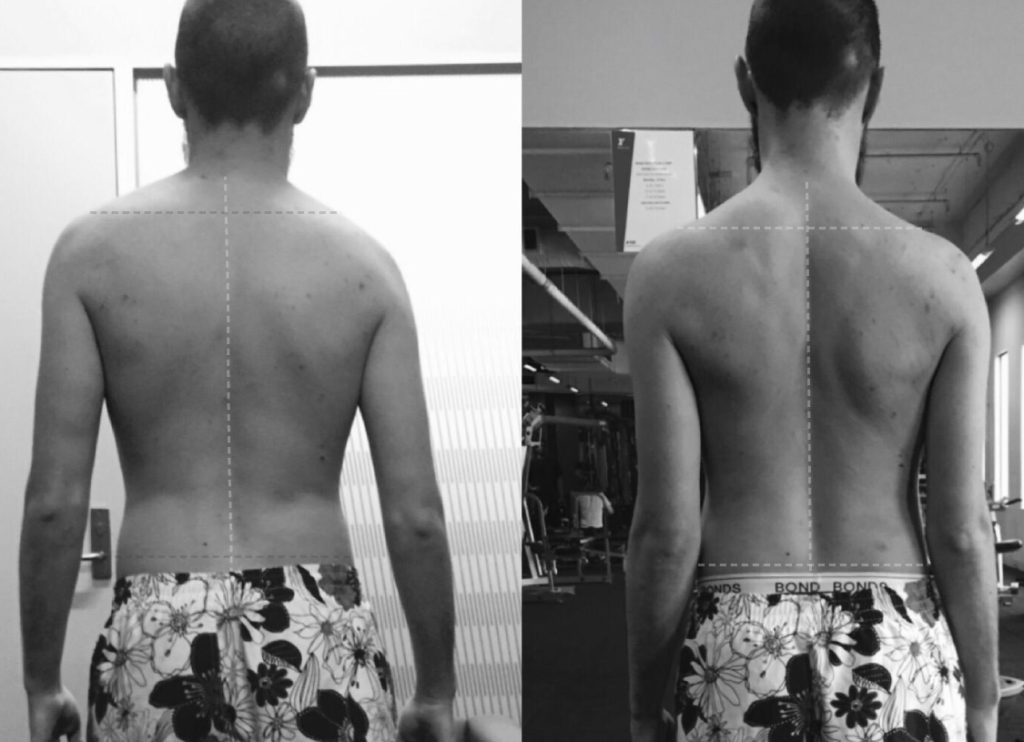
Scoliosis posture correction spinal alignment client result Functional Training Melbourne
Scoliosis
Posture correction and spinal alignment.
Improved alignment, restored symmetry and better load distribution through the back and surrounding musculature.
This client presented with scoliosis and visible asymmetries through the spine, shoulders and pelvis. The body had adapted by shifting and rotating around the spinal curve, leading to uneven loading. The focus was on improving alignment, restoring better symmetry and retraining movement patterns so the body could distribute load more evenly and reduce unnecessary strain.
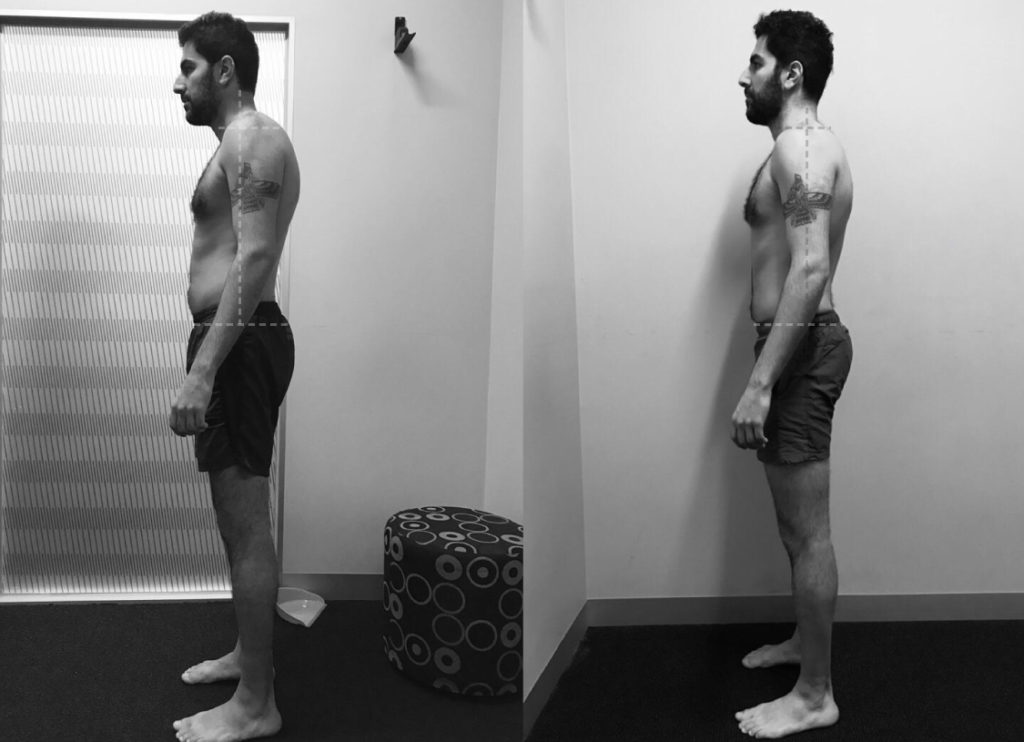
Severe scoliosis neurological compensation movement rehabilitation client result Functional Training Melbourne
Complex Scoliosis
Neurological compensation and movement rehabilitation.
Improved scoliosis presentation, reduced compensatory strain and better overall control.
This client presented with severe scoliosis within a complex neurological picture following early childhood strokes related to Moyamoya disease. The focus was on improving body awareness, ground contact, abdominal control and overall alignment while gradually reducing compensatory patterns through the spine and pelvis.
Video Results
Movement changes you can see in motion.
Posture photos can show structural change, but video often gives a clearer view of how the body is organising movement, timing, pressure and control.
Result Video 1
Full Body Coordination and Propulsion
• Restricted upper and lower body movement
• Low confidence moving through space
• Poor body awareness and coordination
• Built more integrated full body strength
• Improved arm and leg sequencing
• Better propulsion and lighter foot contact
Result Video 2
Improved Lower Body Mechanics
• Solid knee improvement
• Born with a dislocated hip
• Long history of hip, knee, and foot issues
• No longer a chronic day to day problem
• Better connection from the ground up
• Improved hip and femur control
• Knee valgus while running under better control
Result Video 3
Car Accident Recovery and Load Control
• Car accident recovery
• Ongoing lower back and hip pain
• High physical demand through construction work and daily life
• Improved posture, trunk control, and movement efficiency
• Better load distribution through the hips and lower body
• Significantly less strain through the back and hips
Result Video 4
Movement Restriction to Propulsion
• Restricted movement and stiff hips
• Poor full body coordination
• Low upper body strength relative to lower body
• Built more upper body structure and control
• Improved chain integration for propulsion
• Max speed improved from 7 km/h to 22 km/h
Start Here
Want to understand what is driving your movement issues?
The first step is an initial assessment. We look at how your body moves, where compensation may be coming from, and whether in person training is the right fit for your situation.


Request an Initial Assessment